The Architecture of the Perfume Industry
- perfumery
- business
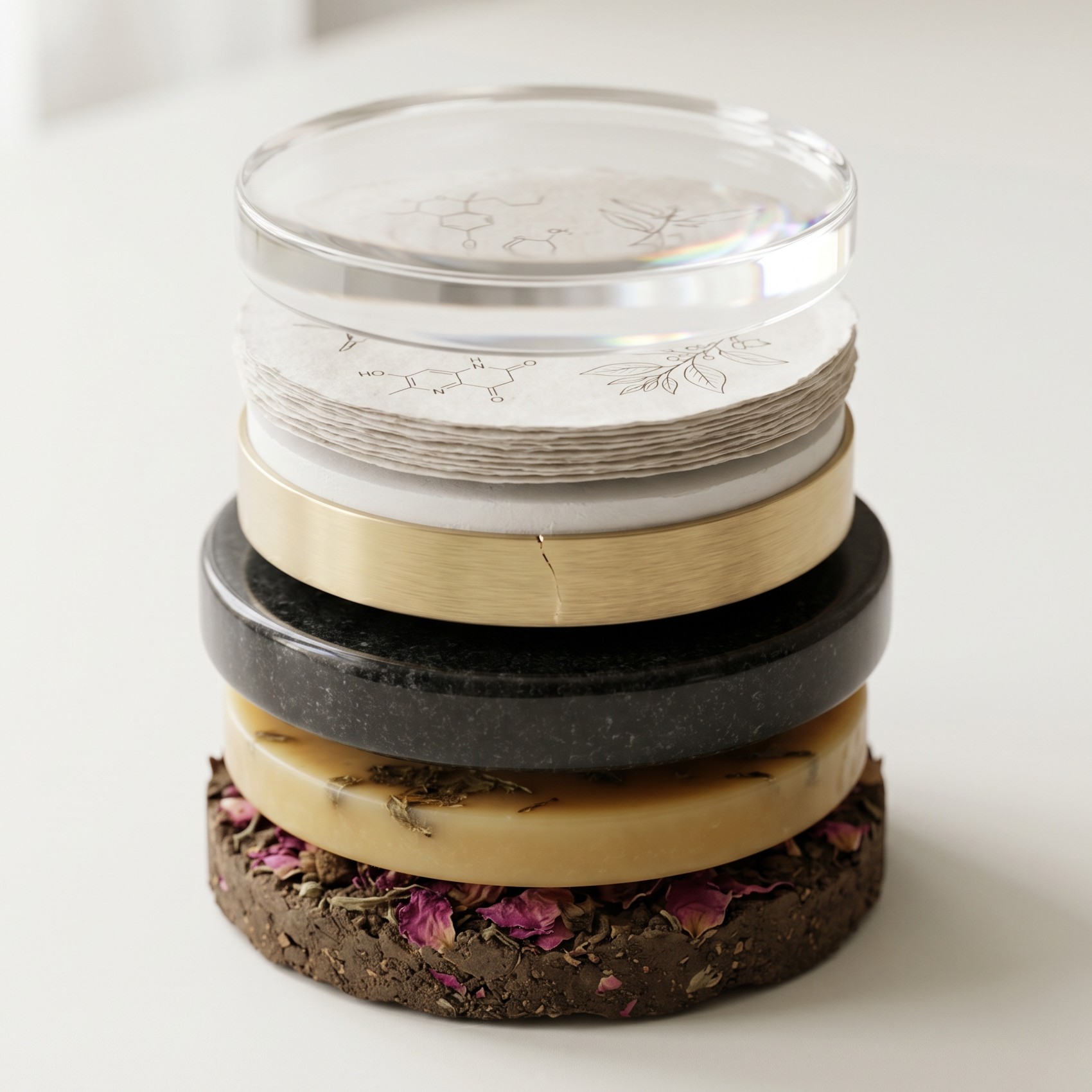
Most people think of a perfume in terms of the brand on the bottle and the perfumer who created it. That's two layers of a system that has six. Understanding the full structure explains a lot of things that are otherwise confusing: why fragrances get reformulated without announcement, why the same perfumer's work appears across a dozen competing brands, why a €12 supermarket fragrance and a €300 niche bottle are structurally more different than their price gap suggests, and why the fashion house whose name is on the box often had almost nothing to do with what's inside it.
The ground floor: farmers and extractors
At the base of the supply chain are the agricultural operations that produce botanical raw materials. Rose farmers in the Kazanlak Valley in Bulgaria and the Isparta region of Turkey. Vetiver cultivators in Haiti, Java, and Réunion. Ylang ylang growers in the Comoros archipelago. Jasmine fields around Grasse and in Madurai. These are often small family operations or regional agricultural cooperatives, selling harvests to extractors — sometimes the same entity, sometimes a separate specialist.
Extractors convert botanical material into the usable perfumery ingredient: steam distillation, solvent extraction, CO2, cold pressing, depending on the plant and the intended product. In the Grasse region, companies like Charabot, Bontoux, and Albert Vieille have operated as extractors for generations, sitting between the farms and the global ingredient market. They're rarely visible in any consumer-facing communication, but they're a critical node: the quality and character decisions made at extraction define what the ingredient houses receive.
The ingredient houses: the invisible center
Above the extractors sits the layer most people have never heard of, that effectively controls the global fragrance industry. Four companies — Givaudan, IFF, Symrise, and dsm-Firmenich — collectively account for somewhere between 50 and 70 percent of the global flavors and fragrances market. The remainder is covered by a second tier: Robertet, Mane, Takasago, Sensient, and others. These are not perfume brands. Most consumers have never seen their names. They are the companies that actually make the vast majority of fragrances worn everywhere in the world.
What do ingredient houses actually do? Several things simultaneously, which is what makes them so structurally powerful. They synthesize aromachemicals — the synthetic molecules that form the backbone of modern perfumery. Many are developed as proprietary "captive molecules," synthetic aroma chemicals for exclusive internal use, not sold on the open market, giving their creator a competitive advantage no rival can replicate until the patent expires. A perfumer employed by Givaudan has access to Givaudan's captive library. An independent perfumer does not. This is a structural advantage baked into the industry's DNA.
They also source, process, and stockpile natural materials — maintaining quality relationships with specific farms and regions, aging stocks of materials like patchouli. And critically, they employ the perfumers who create the actual fragrance formulas that brands will sell.
Robertet deserves a note as a distinct case. Family-owned, Grasse-based, explicitly naturals-focused, it operates at a smaller scale than the four giants and with a different philosophy — one that prioritizes rare natural raw materials over synthetic molecule R&D. Perfumers like Jérôme Epinette work for Robertet. The character of their output reflects the house they work in.
The brief: how fragrances actually get made
When a brand decides to create a new fragrance, the process looks nothing like the romantic image of a perfumer alone in a lab pursuing a vision. In the commercial tier, a marketing brief is assembled by the brand's team — rarely by someone with specific perfumery education — describing the target market, the emotional concept, the product format, the formula cost ceiling, and the timeline. It's then sent simultaneously to multiple ingredient houses, typically three to six, each of which assigns one or more perfumers to develop submissions on spec. The ingredient house bears the development cost with no guarantee of return. The brand evaluates, selects a winner, and licenses the formula. The formula remains owned by the ingredient house.
This single structural fact explains reformulations. When an ingredient becomes restricted by IFRA regulation, or when a natural material's cost spikes after a bad harvest, or when a captive molecule's patent expires, the formula can be adjusted by the ingredient house. The brand may not be fully aware of every change. The consumer has no mechanism to know. The "same" fragrance in a new batch may smell different for reasons never disclosed — not through malfeasance, but because the formula is a living document managed by the ingredient house, not a fixed recipe owned by the brand.
Most brands in the selective distribution circuit also use licenses: the parent company authorizes a third party to orchestrate development and marketing while the brand provides only the name and aesthetic direction. Many fashion houses — Valentino, Prada, numerous others — have essentially zero involvement in the olfactory content of their fragrances. The formula, the brief, and the production are entirely managed by a license holder such as Coty, Interparfums, or Puig.
The perfumer's actual position
Most perfumers in the world are employees of ingredient houses, competing on briefs for clients whose names they may never publicly disclose. Their formulas, if selected, generate revenue for the house. Their names are often absent from the finished product entirely.
A small number work in-house at fragrance brands directly: Chanel has Olivier Polge, whose father Jacques Polge held the role before him. Hermès had Jean-Claude Ellena for eighteen years, now Christine Nagel. Guerlain has Thierry Wasser. Cartier has Mathilde Laurent, who has been in-house for over fifteen years — an unusual commitment from a jewelry and watchmaking brand that treats perfumery as a genuine creative discipline rather than a revenue line. Laurent's work in Cartier's Les Heures and Les Heures Voyageuses lines reflects the kind of olfactory identity that only sustained in-house tenure produces. Most luxury non-fashion brands treat their fragrance lines as licensed extensions; Cartier is an exception that proves the rule.
An even smaller group operates independently — perfumers who have left the ingredient house structure to take direct commissions from brands without the intermediary. They gain creative freedom and direct relationships, but lose access to captive molecules and institutional R&D.
The brand tier system
Mapped against this supply chain, perfume brands exist at very different points of engagement. Rather than a simple hierarchy, there are distinct structural models, and the same price tier can contain brands operating on fundamentally different logic.
Duplication sits at the base. Operations using gas chromatography-mass spectrometry to reverse-engineer existing fragrances at the molecular level, substitute expensive components for cheaper alternatives, and sell the result at steep discounts. This is legal — fragrance formulas cannot be patented — and constitutes a significant portion of the market serving supermarket private label and the explicit "dupe" category. There is no creative input at this level; the value is pure price arbitrage.
Adjacent but distinct is the referencing model, of which Zara is the most visible example. Zara commissions original work that deliberately echoes existing fragrances from niche and designer houses — not GC-MS clones, but thematic approximations at very low formula cost. The distinction matters: referencing produces a fragrance that points toward something, while duplication attempts to reproduce it. The consumer outcome may look similar; the structural relationship to the supply chain is different.
Celebrity fragrances represent the license model taken to its logical extreme. The celebrity licenses their name and image to a company like Coty or Interparfums, which then commissions from ingredient houses via standard brief competitions. The celebrity typically has minimal to zero involvement in the actual formula. The formula cost is negligible relative to retail price. The product is built entirely on the name's marketing value, with the fragrance itself functioning as packaging for a brand association. This is the most extreme version of the gap between what's on the bottle and what determined what's inside it.
Mass designer and fashion licensing operates one tier above: the fashion brand provides name, visual identity, and aesthetic direction, while a license partner manages production. The brief is marketing-directed and the formula selection is focus-group-informed. The formula budget per unit is higher than commodity, but the optimization target is still mass recognizability. The liquid in a €90 designer fragrance at retail may cost €2 to €3 to produce.
What's interesting is how differently fashion houses can occupy this general tier depending on the seriousness of their creative director's engagement with fragrance as a medium. Loewe under Jonathan Anderson is a useful contrast case. Anderson is one of very few fashion creative directors who treats fragrance as a genuine artistic extension of the house's identity rather than a licensing revenue stream. The Aura collection — including the fragrances we've discussed elsewhere — reflects olfactory ambition unusual for a fashion house at this level: named perfumers, unusual materials, genuine creative latitude. Most houses in Loewe's position produce perfumes that feel like fabric softener. Anderson produced something that could stand alongside niche work on its own terms.
Similarly, Givenchy's La Collection Particulière — the prestige tier within a commercial LVMH house — represents a commercial house explicitly creating a niche-mode operation within itself. Named perfumers, exceptional materials, smaller distribution, higher prices, genuine creative latitude. Guéros's Fantasque and the other pieces in that collection are not produced on commercial brief logic. The house has essentially ring-fenced a separate creative structure operating at a different level than the main Givenchy fragrance line. This model — niche tier within a commercial house — is becoming more common as prestige brands recognize the value of genuine artistic credibility alongside their commercial volume lines.
Commercial niche — Byredo, Le Labo, Diptyque, Jo Malone, Maison Margiela Réplica — commissions specific named perfumers with higher creative latitude and higher material budgets. The brief tends to be aesthetic and conceptual rather than market-research-driven. The distinction between this tier and mass designer is not primarily price; it's the relationship between the brand and the creative process. A niche brief typically starts with a perfumer asking what the fragrance should feel like. A designer brief typically starts with a marketing team asking what the fragrance needs to outperform on a shelf.
Within this tier, Frédéric Malle represents a specific and distinct variation: the publisher model. Malle doesn't direct his perfumers — he commissions and publishes them, giving full creative control and putting their names as prominently as his on the bottle. Ropion's Promise, Edouard Fléchier's Carnal Flower, Ralf Schwieger's Dans Tes Bras — these are the perfumers' visions, not a house aesthetic interpreted through interchangeable talent. It's structurally closer to a literary publisher than to any conventional fragrance brand.
Serge Lutens operates on a different and equally unusual model. Lutens is not a perfumer — he's a visual artist, photographer, and creative director whose career spans fashion imagery and aesthetic direction for Shiseido. The fragrances carry his artistic vision and his name, but the nose is Christopher Sheldrake, with whom Lutens has maintained a decades-long collaboration. The result is a rare structure: a non-perfumer as the genuine creative brain, a perfumer as the technical translator. Neither is replaceable by the other. The work is neither Lutens's alone nor Sheldrake's alone; it's a genuine two-person authorship that the industry has no standard vocabulary for.
At the more artisanal extreme sits the perfumer-as-founder model, of which Nasomatto is the sharpest example. Alessandro Gualtieri creates every Nasomatto fragrance himself — no external perfumer commissions, no creative director above him. Minimal marketing, high prices, distinctive packaging, pure olfactory vision. The brand is the perfumer's extended practice. Maison Francis Kurkdjian operated on a similar principle at its founding: Kurkdjian himself creates all the fragrances. The structural complication is that Kurkdjian was acquired by LVMH in 2017, raising the perpetual question about what happens to creative autonomy under conglomerate ownership. The output post-acquisition has expanded significantly; whether it has changed in character is a matter of genuine debate.
Creed occupies a structurally fascinating position for different reasons. The brand's mythology — founded 1760 in London by James Henry Creed, purported creator of fragrances for European royalty, sixth generation of perfumers — is extraordinary brand storytelling that built one of the most valuable independent fragrance houses in the world. The relationship between that mythology and the actual history of production has been persistently contested, with questions about where formulas were created, who created them, and how much the Creed family actually functioned as working perfumers versus as brand custodians. What is unambiguous is the outcome: Kering acquired Creed in 2023 for a reported €3.5 billion — a remarkable valuation that reflects the market power of brand storytelling, whatever the underlying production reality. It is the most extreme example in fine fragrance of brand mythology operating independently of supply chain transparency.
At the top of the structure sit the grandes maisons: Chanel, Hermès, Guerlain, Dior. These houses have sufficient scale, prestige, and revenue to own more of the supply chain directly. Chanel owns rose and jasmine fields in Grasse. They stockpile aged patchouli. They have in-house perfumers with long tenures. Hermès operated with Jean-Claude Ellena in-house for eighteen years, producing a coherent and distinctive olfactory identity that couldn't have emerged from brief competitions. At this tier, the formula is genuinely owned by the house, the perfumer is genuinely working for the house, and sourcing relationships extend to the farm.
The distance between the grande maison model and the celebrity fragrance model isn't primarily price. It's how far upstream the brand's control and creative input reach into the supply chain, and how much the brand's actual structure corresponds to the story its marketing tells. At one end, a house with direct farm relationships, in-house tenure, and proprietary ingredient stocks produces something that couldn't have been made by anyone else. At the other end, a name on a bottle and a Coty brief competition.
Everything between those poles is a specific configuration of what the brand controls, what it commissions, and what it leaves to others. Understanding that configuration — rather than reading the price or the marketing — is what actually tells you what's in the bottle and whose vision you're wearing.