Apple Music's Secret Update and the Cost of Clarity
- music
- design
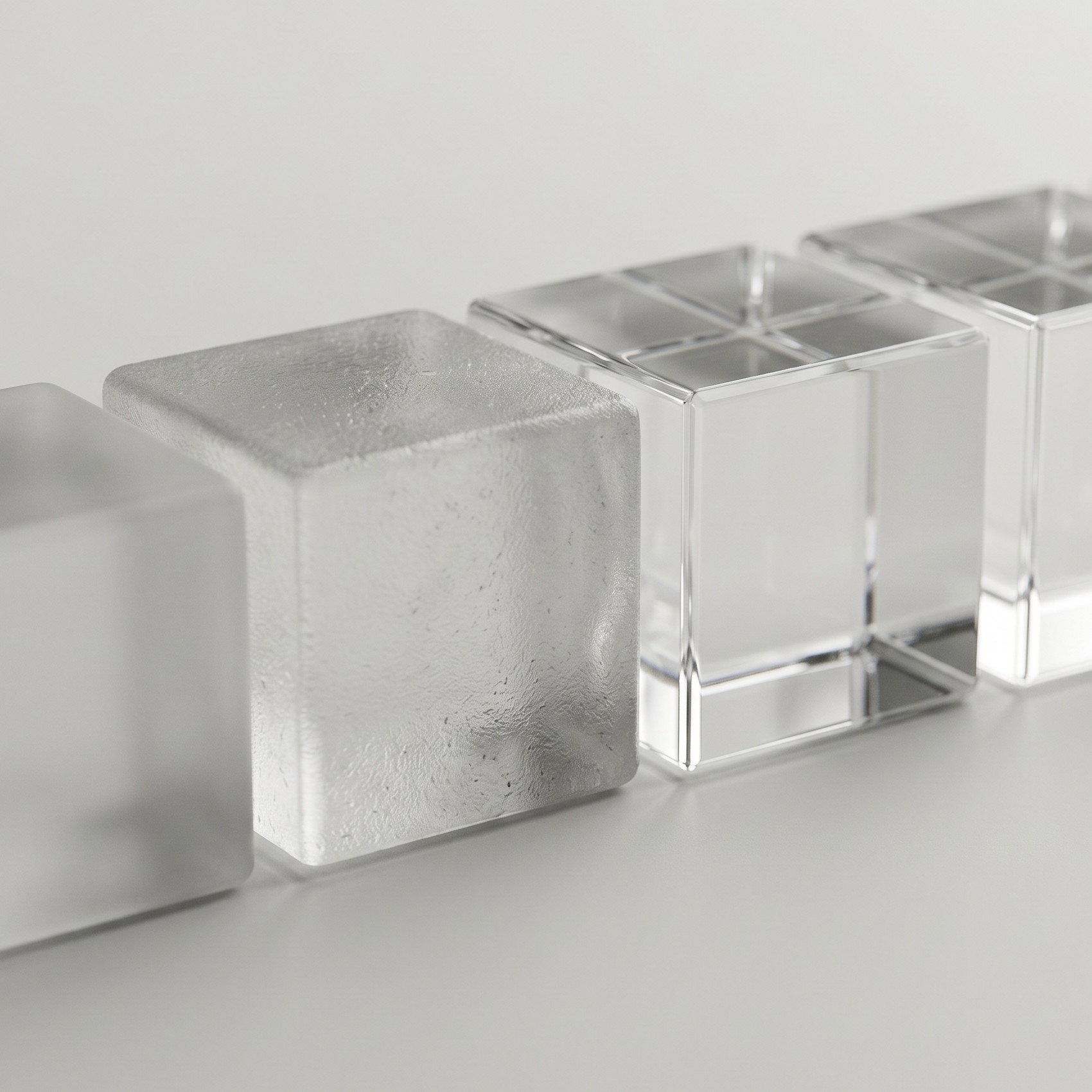
Something changed around April. The first clear signal was Lucius.
"Dusty Trails" is a track whose identity is inseparable from what Jess and Holly Lapointe's voices are doing to each other in the production. They're not harmonizing in any conventional sense — they're blended, processed into a single synthetic object that doesn't parse as two people but as one voice with its own specific weight and texture that belongs to neither of them individually. I know what that track sounds like. The sonic signature is settled in me. And sometime in April, it wasn't quite the same.
Not wrong, exactly. More exposed. The vocals landing as distinct elements rather than the fused thing the production is explicitly built to create. Like someone had replaced frosted glass with clear glass and described this as an improvement in visibility.
Other tracks confirmed the direction: synth layers more segregated, spatial effects more pronounced, the overall presentation more explicit and less blended. I listened on the same headphones I always use — iPhone, Mac — and the shift held consistently across both. Nothing had changed on my end.
A thread that matched
Searching for community discussion turned up a thread on r/AppleMusic. The original poster, an eleven-year subscriber listening through a Cambridge Audio amplifier and B&W speakers, described Apple Music since the 26.4 update as sounding brighter, louder, with less bass — "almost like Spotify high resolution sounding." The responses divided roughly in half: several users heard no difference; others confirmed the shift. A music producer writing that they use studio-grade headphones and mix and master professionally reported that every track they played sounded less warm. Different artists, different genres, all pointing in the same direction. Another user made the most technically specific observation: a sense that the low mids had been scooped, and that the stereo image had widened, which would explain a perceived hollowness in the body of the sound.
The OP, testing the same material on an iPad still running iOS 26.3 against an iPhone on 26.4, reported a clear difference: 26.3 more refined in soundstage and midrange, 26.4 more fatiguing in the treble. Nobody in the thread reached a definitive technical explanation. Apple said nothing. A few days into the update the OP posted again: the sound had returned "more or less to where it had been." Someone else offered an observation worth keeping. For years, they'd noticed a slight change in how iOS audio sounds with every major update, a pattern consistent enough that they keep two devices on different OS versions specifically to test it.
The AirPods Max 2 window
The timing of all this maps onto a specific and documented hardware event.
On April 1, 2026 — directly inside the window when the shift became audible — Apple released the AirPods Max 2. The hardware launched with a confirmed new sound signature: brighter, with more sub-bass, reduced mid-bass warmth, and significantly improved soundstage and instrument separation. Reviews from music producers and audiophiles confirm this consistently. One describes the vocal presentation as more "in your face," with a boost in the 9–10kHz range that becomes fatiguing on certain tracks. The instrument separation, by contrast, is widely praised, described as comparable to open-back headphones, a genuine improvement over the first generation. One commenter summarized what they see as Apple's current audio direction: putting more "air" into the overall sound, boosting the sub-bass and high end toward something that reads as spacious and detailed rather than warm and blended.
This is precisely the character described in the Apple Music thread. And it is precisely the character I noticed in April.
Whether Apple simultaneously adjusted the Music app's audio rendering to align with the new hardware's capabilities is not documented anywhere in the public record. Apple's technical specifications for the AirPods Max 2 confirm a "custom-engineered high-dynamic-range amplifier." Apple's release notes for iOS 26.4 document UI changes to Apple Music — colored album backgrounds, concert ticket integration, AI playlists — and say nothing about the audio stack. The pattern of silent audio adjustments per iOS update is documented by users tracking it across devices. The mechanism of the specific April change is unconfirmed. The perceptual consequence is not.
The Atmos catalog
Behind the hardware timing sits a structural change that has been accumulating for longer. Apple estimates that between 85 and 90 percent of songs and albums currently charting are now delivered in Dolby Atmos on the service. Over twelve million tracks in the catalog carry Atmos mixes. The format treats each instrument as an independent spatial object positioned in three-dimensional space, rather than blending everything into two stereo channels. It produces separation by design. As the proportion of Atmos-delivered content approaches near-totality, the aggregate character of Apple Music shifts toward more explicit, more separated, more spatially legible sound — not because the rendering engine changed, but because the format composition of what's being rendered did.
There's also an economic mechanism driving this that Apple has never communicated to listeners. Labels receive approximately a ten percent royalty premium on Atmos streams. The result is a financial incentive to push existing catalog into Atmos mixes regardless of whether the original production benefits. A careful Atmos mix requires several days of additional work. A rushed one is done in a session. The variance listeners notice — some tracks gaining genuine depth and space, others losing the warmth and body of the original — follows directly from this. The format is being deployed at scale, not with uniform care.
When the production resists
Whether any of this constitutes an improvement depends entirely on what you're listening to. For certain productions the new presentation delivers something closer to the intended experience: cleaner spatial positioning, individual textures that were previously embedded now audible. That's real, and worth having.
The problem is music that doesn't want that.
Charli XCX's most recent album is the precise and personal example. I have listened to it enough times — well into the hundreds for certain tracks — that its sound is not a memory but a physical reference. I know what it sounds like. And it no longer sounds like that.
"Chains of Love" relies on a specific atmospheric quality: long vocal passages with a particular reverb character, a timbral blend that produces moodiness requiring the sounds to bleed into each other rather than stand apart. The atmosphere is the composition; the blending is structural. In the current Apple Music presentation that blend breaks. Each element becomes individually more audible and collectively less cohesive. The vocal at 2:20 — a moment the mix has been building toward — is now partially distracted by the string-like notes playing above it, which were previously present but embedded, and are now present and forward. In other sections of the same track, hearing those strings more distinctly is genuinely immersive. The change doesn't produce uniform results even within a single song. But the overall atmospheric logic of the track, the thing that makes it what it is, has been compromised.
"Altars" is more unambiguous. The production of that track was deliberately strange: processed, not naturalistic, built around a voice that doesn't sound entirely like a voice and strings that don't sound entirely like strings. That strangeness was intentional and specific. It now sounds too clean. The strings are too present, too clearly strings. The voice is too natural, too resolved, stripped of the processing that gave it its particular unease. What remains is technically more detailed and experientially more conventional, hi-fi in a way the track was never designed to be. This is not a subtle difference. It is a different listening experience for a track whose identity depended on not sounding like this. I have no doubt that what I'm hearing now is not what the artists intended anyone to hear.
The sound has not returned to normal for these tracks. Whatever shifted in April — rendering pipeline, Atmos mix propagation, or some combination of both — its effects on this album are persistent and audible to anyone who knew it before.
Not Spotification
The Spotification framing, Apple Music converging toward Spotify's sound, appears in the community discussion and is worth dismissing. Spotify launched a lossless tier at the end of 2025. The structural gap in what Apple Music delivers at its quality ceiling remains significant. What changed is not Apple Music's resolution tier; the codecs are unchanged. The shift is in format distribution and rendering priority, and it moves Apple Music's presentation further from Spotify's, not toward it. Apple Music is more spatially explicit than it was. Spotify is not in the same structural category regardless of recent improvements. The comparison doesn't hold.
Something changed. The community discussion confirms others noticed, with split reactions and at least one user whose experience partially resolved within days. Mine has not, not for the music that matters most as evidence: the tracks I know precisely enough to use as a reference.
What's documented is a new hardware platform with a distinct new sound signature launching exactly in this window, an Atmos catalog approaching saturation, and a long-established pattern of Apple adjusting its audio pipeline between iOS versions without communicating those adjustments to anyone. Whether the specific cause was a hardware-driven rendering optimization, Atmos mix propagation reaching a critical threshold, or both operating simultaneously, Apple will not say. The music just sounds different. Some of it sounds better. Some of it sounds like a different record than the one that was made. The reasons for Apple's silence on this are probably commercial. The cost lands on the listener — a vanishingly small minority of audiophiles — who is left to notice, search, speculate, and eventually accept the change.